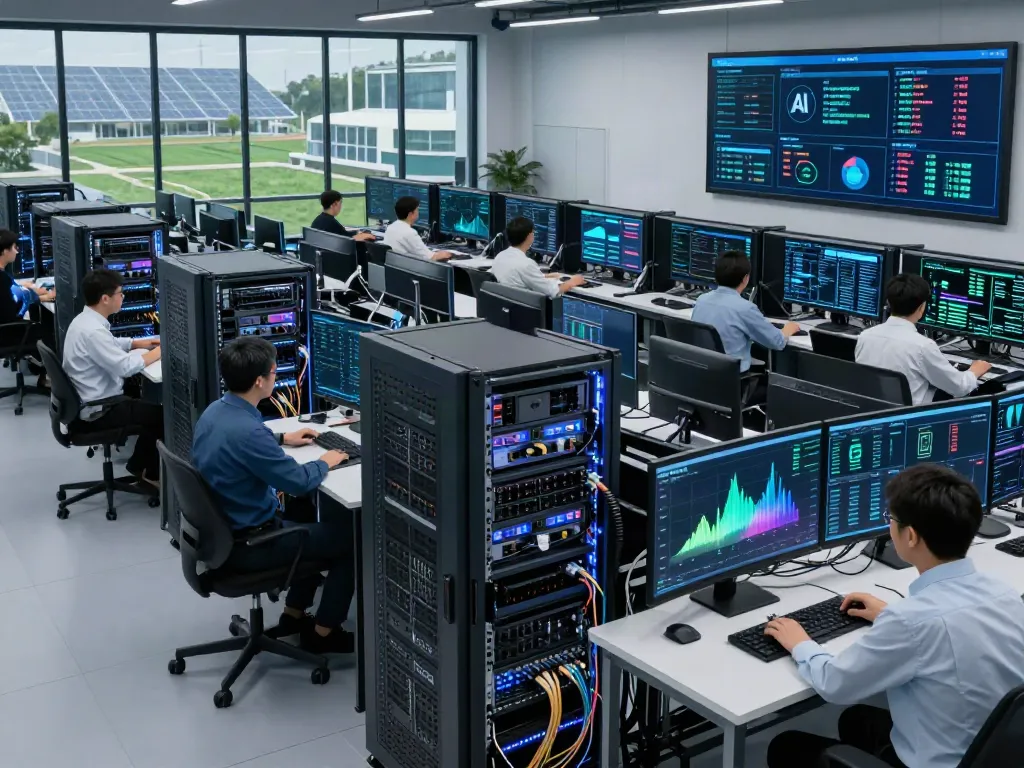
Understanding the AI Data Center Landscape
The rise of artificial intelligence (AI) has catalyzed a significant transformation in how data centers operate, leading to the emergence of specialized AI data centers. These facilities are designed specifically to handle the immense computational demands associated with training and deploying AI applications. As industries continue to adopt AI technologies, understanding the components and structure of AI data centers becomes crucial for businesses looking to innovate and remain competitive.
When exploring options, AI data center infrastructures provide comprehensive insights into how power and computational resources are allocated effectively. AI data centers not only support extensive data processing but also provide the necessary flexibility to accommodate fluctuating demand.
1. Definition of AI Data Centers
AI data centers are advanced facilities specifically optimized for the computational requirements of AI workloads. Unlike traditional data centers that primarily support business applications, AI data centers are built to harness high-performance computing systems, particularly GPUs (Graphics Processing Units), to facilitate machine learning and deep learning tasks at scale.
2. Key Components of AI Infrastructure
The key components of AI infrastructure include:
- High-Performance Computing (HPC): This includes powerful GPUs and TPUs that can handle parallel processing effectively.
- Storage Solutions: Fast and reliable storage systems are essential for managing large datasets required for AI training.
- Networking Equipment: High bandwidth and low-latency networks are necessary to connect various components of the data center efficiently.
- Energy Management Systems: These systems monitor energy consumption and optimize power usage to ensure sustainable operations.
3. Differences from Traditional Data Centers
AI data centers differ from traditional data centers in several critical aspects:
- Computational Focus: While traditional data centers may focus on hosting applications and storing data, AI data centers prioritize computational power to process complex algorithms.
- Hardware Requirements: AI workloads necessitate specialized hardware, such as GPUs, which are capable of managing simultaneous computations, as opposed to CPUs typically used in traditional environments.
- Environmental Controls: AI data centers often require more sophisticated cooling solutions to handle the increased heat output from high-density computational workloads.
Power Management in AI Data Centers
Energy consumption is a significant concern in AI data centers due to the intensive power requirements associated with high-performance computing. Effectively managing power resources is essential for both operational efficiency and environmental sustainability.
1. Role of Electricity in AI Operations
Electricity plays a pivotal role in the operation of AI data centers. The computational power needed for AI requires substantial energy, which must be sourced sustainably to minimize environmental impact. Understanding electricity's role helps organizations optimize their operations and reduce costs.
2. Sustainable Power Solutions
AI data centers can adopt several sustainable power solutions:
- Renewable Energy: Utilizing solar, wind, and hydroelectric power sources helps reduce carbon footprints.
- Energy Storage: Implementing advanced battery systems can provide backup power during outages and optimize energy use during peak demand times.
- Power Purchase Agreements (PPAs): Entering into PPAs with renewable energy providers can secure clean energy at fixed rates over long periods.
3. Energy Efficiency Metrics in the AI Sector
To evaluate the performance of AI data centers, businesses often turn to key energy efficiency metrics, including:
- Power Usage Effectiveness (PUE): A ratio that measures how efficiently a data center uses energy; it compares total building energy usage to the energy used by the IT equipment alone.
- Carbon Usage Effectiveness (CUE): This metric helps quantify the carbon emissions resulting from data center operations relative to the computing performed.
- Data Center Infrastructure Efficiency (DCIE): This percentage metric indicates how effectively energy is being used to power IT equipment.
AI Models and Their Resource Requirements
As AI technologies evolve, the resource requirements for running complex models become more demanding. Understanding these needs is vital for designing effective AI data centers.
1. GPU and CPU Needs for Machine Learning
Machine learning algorithms typically require a combination of GPUs and CPUs to function effectively. While CPUs handle general-purpose tasks, GPUs are indispensable for processing vast amounts of data through parallel computing. The balance between these resources is essential for enhancing processing efficiency and achieving optimal performance in AI applications.
2. Scalability Challenges
Scalability is a considerable challenge for AI data centers, as they must accommodate growing data demands without compromising performance. Challenges include:
- Scaling hardware resources quickly to meet fluctuating demands.
- Ensuring that power supply and infrastructure can support sudden increases in AI workload.
- Maintaining efficient cooling systems to prevent overheating as workloads increase.
3. Optimizing Data Processing Workloads
To optimize data processing workloads effectively, organizations can employ several strategies:
- Load Balancing: Distributing workloads evenly across available resources to prevent bottlenecks.
- Data Pipeline Optimization: Streamlining data flows to ensure that data reaches processing units as efficiently as possible.
- Batch Processing: Organizing data into batches can reduce the overhead associated with constant data input and output, improving overall efficiency.
Real-World Applications of AI Data Centers
AI data centers enable a wide range of applications across various industries, demonstrating their impact on real-world scenarios.
1. Case Studies of Leading AI Data Centers
Several companies have successfully implemented AI data centers that showcase innovative applications:
- Google: Their TensorFlow platform relies on powerful AI data centers worldwide to process search queries and enhance advertising algorithms.
- Amazon Web Services (AWS): AWS offers machine learning services powered by robust AI infrastructure, enabling businesses to integrate AI capabilities into their applications.
- NVIDIA: As a leader in GPU technology, NVIDIA's AI data centers support various applications, from autonomous vehicles to healthcare diagnostics.
2. Impact on Industries: Healthcare, Finance, and More
AI data centers are transforming various sectors:
- Healthcare: AI technologies assist in diagnostics, patient care predictions, and personalized medicine through data analysis.
- Finance: Financial institutions leverage AI for fraud detection, risk assessment, and trading algorithms to enhance decision-making processes.
- Retail: AI enhances customer experience through personalized recommendations and inventory management based on predictive analytics.
3. Future-Proofing AI Infrastructure
As AI technologies advance, data centers must continuously evolve to meet new challenges. Strategies for future-proofing AI infrastructure include:
- Investing in Cutting-Edge Technology: Staying updated with the latest hardware and software developments to ensure optimal performance.
- Flexible Infrastructure Designs: Developing adaptable architectures that can be easily modified to accommodate changing needs.
- Ongoing Training and Skill Development: Ensuring that personnel possess the necessary skills to operate advanced systems effectively.
Looking Ahead: Trends in AI Data Centers for 2026
The AI data center landscape will continue to witness transformative trends as we approach 2026. Understanding these trends is crucial for staying ahead of the competition.
1. Innovations on the Horizon
In the coming years, AI data centers are expected to see numerous innovations, such as:
- Quantum Computing: As quantum technology matures, it may revolutionize data processing capabilities, enabling faster computations for complex algorithms.
- Edge Computing: Distributing AI processing closer to where data is generated can reduce latency and improve responsiveness for applications such as autonomous vehicles and smart devices.
- AI-Driven Resource Management: Implementing AI to manage and optimize resources dynamically will enhance operational efficiency and reduce waste.
2. Predictions for AI Infrastructure Development
Experts predict several key developments for AI infrastructure by 2026:
- Increased Automation: Automating routine maintenance and management tasks will allow organizations to focus on strategic initiatives.
- Heightened Security Measures: As reliance on AI grows, so will the need for robust cybersecurity measures to protect sensitive data.
- Integration of AI and IoT: The convergence of AI and Internet of Things (IoT) technologies will facilitate smarter and more efficient data centers.
3. Balancing Growth with Sustainability
As demand for AI data centers grows, maintaining a focus on sustainability will be paramount. Strategies include:
- Investing in Green Technologies: Utilizing renewable energy sources, sustainable materials, and energy-efficient designs.
- Implementing Circular Economy Practices: Reusing and recycling components to minimize waste.
- Monitoring Environmental Impact: Regular assessments to evaluate ecological footprints and ensure compliance with sustainability goals.